- Home
- City Services
- Planning & Building
- Low Carbon Buildings
Low Carbon Buildings
The Low Carbon Homes Pilot
The City of Nelson has been leading low carbon building research and initiatives targeting embodied carbon reductions through the Low Carbon Homes Pilot (LCHP) since 2021. Check out Embodied Carbon Basics for a refresher on what embodied carbon is, and how we can measure it.
Read the full story of how the Low Carbon Homes Pilot is Targeting Hidden Emissions in Nelson BC, or check out Nelson's Material Carbon Emissions Guide, Benchmarking Study, and other resources below.
-----------------------------------------------------------------------------------------------------------------------
In 2024, we created 2 Toolkits to support the building sector and local governments in taking steps to reduce their lifecycle carbon impacts.
Local Government - Sustainable Procurement Toolkit (2024)
- LG Guide to Sustainable Procurement - A Lifecycle Approach (2025)
- Sustainable Procurement - UBC Scholar Research Paper (2024)
- More coming very soon!
Building Industry - Low Carbon Building Toolkit (2024)
10 Affordable Steps to Reduce Embodied Carbon on Building Projects for:
| Energy Advisors | Building Officials |
| Architects, Engineers & Designers | Builders & Homeowners |
Embodied Carbon Basics
When you look at these two houses what do you see?
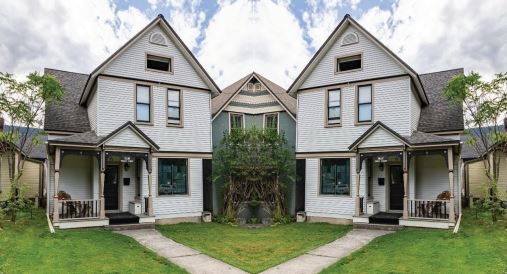
Would it surprise you to learn that two seemingly identical houses, with the same floorplans, features, and location, could have wildly varying impacts on the environment and climate?
So, what is embodied carbon and why does it matter?
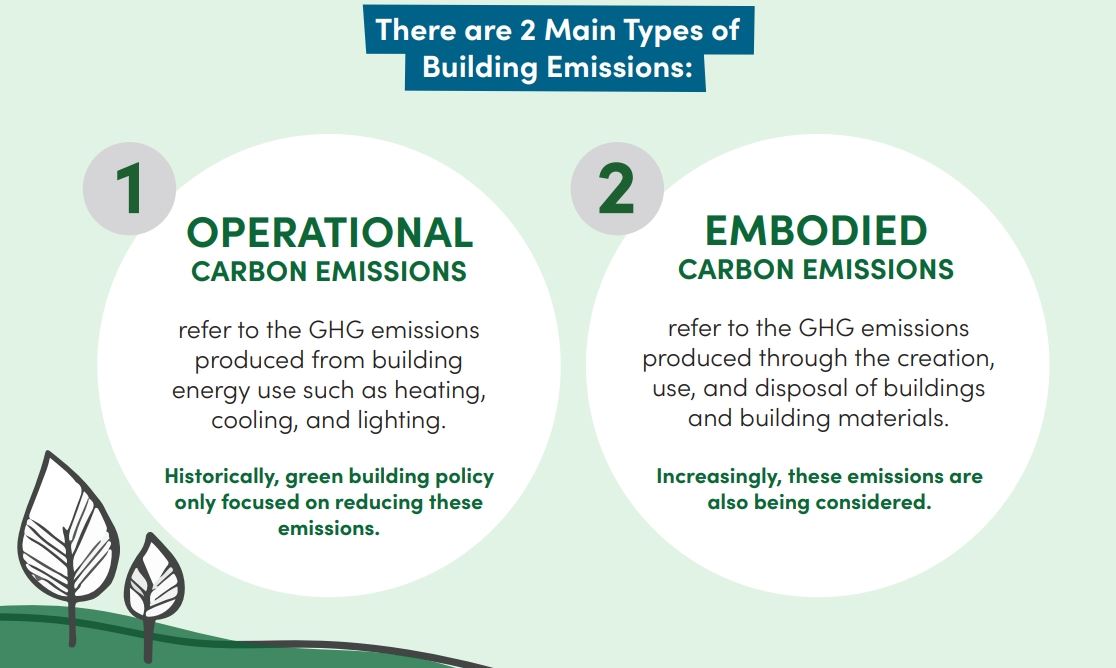
The materials we use to build our homes have substantial impacts on our planet. One of these impacts is embodied carbon emissions. Embodied carbon emissions contribute about 50% of the total emissions a given building incurs over its lifetime.
How do we measure embodied carbon?
Embodied carbon is measured by a process known as a Life Cycle Assessment (LCA), which collects data on the impacts associated with a building’s components throughout its lifecycle. This process helps promote supply chain transparency by accounting for embodied carbon and other impacts, like water use and contamination, air pollution, deforestation, dangerous working conditions, and child labor.
Optimizing lifecycle costs and carbon is tricky!
While building practices and codes have made leaps and bounds towards improving home energy efficiencies and reducing operational carbon emissions, we have yet to see progress made to the same extent towards reducing embodied emissions. The Low Carbon Homes Pilot team strives to better understand the balance between operational and embodied emissions support low carbon building innovation.